
Schedule a Free Consultation|
Call 815-740-4025

-

- Home
- Our Firm
- Criminal Defense
- Assault & Battery
- Domestic Battery / Domestic Violence
- DUI/DWI
- Drug Crimes
- Driver's License Reinstatement
- Speeding Tickets, Traffic Offenses & Violations
- CDL Violations
- Gun & Weapons Charges
- Felony Crimes
- Misdemeanor Crimes
- Juvenile Crimes
- Expungement & Record Sealing
- Resisting Arrest / Obstructing the Police
- Retail Theft & Shoplifting
- Police Questioning: When Miranda Warnings Are Required
- Media
- Blog
- Contact
Drug Possession Charges in Joliet: What Most People Get Wrong About Illinois Controlled Substance Laws
 Most people arrested for drug possession in Joliet believe they're facing relatively minor consequences. They're wrong. Illinois treats controlled substance possession as a serious felony crime with harsh penalties including years in prison and fines up to twenty-five thousand dollars. Even first-time offenders with small amounts of cocaine, heroin, or prescription pills face Class 4 felony charges carrying one to three years incarceration. The misconception that drug possession is "just a misdemeanor" or will result in probation automatically leaves defendants unprepared for the reality of Illinois's controlled substance laws and the aggressive prosecution they face in Will County courtrooms.
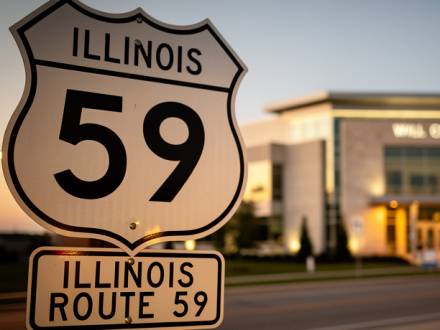
Consider what happened to a client who walked into my office last month. Marcus, a twenty-four-year-old from Plainfield, was pulled over on Route 59 for a broken taillight. During the traffic stop, officers found half a gram of cocaine in his center console. Marcus thought he'd pay a fine and maybe do community service. Instead, he faced a Class 4 felony under 720 ILCS 570/402 with a sentencing range of one to three years in the Illinois Department of Corrections and up to twenty-five thousand dollars in fines. His criminal record was clean before this arrest. One small bag of cocaine threatened to destroy everything he'd built. This scenario plays out regularly in Joliet, Bolingbrook, Romeoville, and throughout Will County as residents discover Illinois drug laws carry far harsher consequences than they imagined.
Understanding Illinois's Five-Schedule Drug Classification System
Illinois organizes controlled substances into five schedules under the Illinois Controlled Substances Act found at 720 ILCS 570/100. Schedule I drugs include heroin, LSD, ecstasy, and psilocybin mushrooms considered to have no accepted medical use and high potential for abuse. Schedule II includes cocaine, methamphetamine, fentanyl, and prescription opioids like oxycodone. Schedule III covers anabolic steroids and ketamine. Schedule IV includes Xanax, Valium, and Ambien. Schedule V covers cough medicines containing codeine.
Penalties escalate based on which schedule contains the substance. Possession of Schedule I or II narcotics is always a Class 4 felony at minimum under 720 ILCS 570/402, regardless of amount. Even residue amounts trigger felony charges. Possession of Schedule III, IV, or V substances also constitutes a Class 4 felony. The one-to-three-year sentencing range applies across all schedules for basic possession charges. As a former Will County prosecutor with over twenty years of criminal defense experience, I've seen how quickly possession charges escalate when prosecutors add enhancements to base charges.
Cannabis Possession Remains Illegal Above Legal Limits
Illinois legalized recreational marijuana in 2020, but strict possession limits remain under 720 ILCS 550/4. Illinois residents age twenty-one and older can legally possess up to thirty grams of cannabis flower, five hundred milligrams of THC in infused products, or five grams of concentrate. Non-residents face lower limits: fifteen grams, two hundred fifty milligrams of THC, or two and a half grams of concentrate.
Possession of thirty to one hundred grams is a Class B misdemeanor punishable by up to six months in jail. Possession of one hundred to five hundred grams escalates to a Class A misdemeanor with up to one year in jail. More than five hundred grams becomes a Class 3 felony carrying three to seven years in prison. Public consumption remains illegal. Learn more on our expungement page.
What Prosecutors Must Prove in Drug Possession Cases
To convict you of drug possession, prosecutors must prove beyond reasonable doubt that you knowingly possessed a controlled substance. Knowledge is the critical element. You must know or have reason to know that you possess an illegal drug. Prosecutors establish knowledge through circumstantial evidence including where drugs were found, whether they were in plain view, whether drug paraphernalia was present, and your statements to police.
Illinois recognizes actual possession when drugs are on your person and constructive possession when drugs are found in areas under your control like your car, home, or backpack. Constructive possession cases are more difficult for prosecutors because they must prove you knew about the drugs and exercised control over them. When multiple people have access to an area where drugs are found, prosecutors must demonstrate why you specifically possessed them. This creates strong defense opportunities in shared vehicle or shared residence situations.
Marcus's Case: How Defense Strategy Matters
Returning to Marcus's situation, the cocaine in his center console presented both challenges and defense opportunities. The traffic stop originated from a broken taillight, giving officers lawful reason to pull him over. However, the search that uncovered the cocaine raised Fourth Amendment questions. Officers claimed they smelled marijuana, justifying a vehicle search. Marcus denied smoking marijuana that day. No marijuana was found in the vehicle. The cocaine was in a small baggie inside a closed center console compartment.
We challenged the search on multiple grounds. First, the marijuana odor justification was questionable given Illinois's marijuana legalization. Adults can legally possess and transport cannabis, so marijuana odor alone doesn't establish probable cause for searches. Second, even if marijuana odor justified searching the vehicle, officers lacked probable cause to open closed containers like the center console without specific reason to believe contraband was inside. Third, Marcus's girlfriend had borrowed his car two days before the stop and had access to the center console.
We filed a motion to suppress evidence arguing the search violated Marcus's Fourth Amendment rights. Before the suppression hearing, prosecutors offered to reduce charges to a Class A misdemeanor with six months supervision, no jail time, and completion of drug education classes. Marcus accepted the offer, avoiding a felony conviction and incarceration. For help with criminal defense cases, visit our criminal defense page.
Illinois 410 Probation and Second Chance Probation Options
First-time felony drug offenders in Illinois may qualify for special probation programs that avoid permanent felony convictions. Section 410 probation under 720 ILCS 570/410 allows courts to place eligible defendants on twenty-four months probation without entering judgment. If you successfully complete probation terms including drug testing, community service, and treatment programs, the court dismisses charges without entering a conviction. This means you avoid a lifetime felony record and maintain eligibility for expungement five years after successful completion.
Eligibility for 410 probation requires that you've never been convicted of any felony offense under the Illinois Controlled Substances Act or any federal or state law relating to cannabis or controlled substances. You must plead guilty or be found guilty of simple possession under 720 ILCS 570/402. The court cannot grant 410 probation without your consent. Second Chance Probation operates similarly for certain defendants who don't qualify for 410 probation. Both programs offer crucial alternatives to permanent felony convictions, but prosecutors must agree to allow participation.
Common Defense Strategies in Drug Possession Cases
Successful drug possession defenses attack different elements of the State's case. Fourth Amendment challenges question whether police had legal authority to stop you, search you, or seize evidence. If police violated your constitutional rights, courts suppress illegally obtained evidence, often resulting in dismissed charges.
Lack of knowledge defenses argue you didn't know drugs were present. This works when drugs are found in shared spaces or closed containers you didn't access. Chain of custody challenges question whether evidence was properly handled. Testing challenges verify substances actually contain illegal drugs.
As a former Will County prosecutor, I understand how the State builds drug cases and where weaknesses appear. Police officers must articulate specific facts supporting probable cause for stops and searches. For more information, see our felony defense page.
The Real-World Consequences Beyond Criminal Penalties
Drug possession convictions create consequences extending beyond jail time and fines. Felony drug convictions make you ineligible for federal student loans. Professional licenses in healthcare, education, and law become difficult to obtain. Employers routinely reject applicants with controlled substance convictions. Housing applications are denied when background checks reveal drug charges.
These collateral consequences often damage lives more severely than the criminal sentence. A first-time offender receiving probation avoids jail but carries a permanent felony conviction affecting employment and housing for decades. Fighting charges aggressively and pursuing alternatives like 410 probation protects your future.
If you're facing drug possession charges in Joliet, Plainfield, Bolingbrook, Romeoville, or anywhere throughout Will County, contact the Law Office of Jack L. Zaremba immediately for a free consultation. We handle possession cases involving all controlled substances and fight aggressively to protect your rights and future. Visit our contact page or call 815-740-4025.